


DHA for Dry Eyes and Brain Health: Can One Nutrient Help Both?

Stages of Life Medical Institute
By David S. Klein, MD, FACA, FACPM, FAAMIMS
Focus keywords: DHA for dry eyes, DHA brain health, omega-3 fatty acids, cognitive function, dry eye syndrome, memory support, EPA versus DHA, retinal health, healthy aging
URL slug: dha-dry-eyes-brain-health-cognitive-function
SEO Meta Description: Discover how DHA supports retinal and brain health, what research reveals about dry eyes and cognition, and how to choose omega-3 supplements wisely.

Quick Look
DHA is an omega-3 fatty acid essential to the structure and function of the retina and brain. It contributes to healthy cell membranes and inflammatory regulation. Although some studies suggest omega-3 supplements may improve dry eye symptoms, large trials have found inconsistent benefits. DHA is important for brain health, but supplementation has not reliably improved memory or prevented dementia.
What do dry eyes and memory have in common?
Dry eyes and memory problems might seem unrelated. One affects the surface of the eye, while the other involves the complex neural networks responsible for learning, attention, and memory.
Yet both depend on healthy cellular membranes, adequate nutrition, and the regulation of inflammatory processes.
One nutrient is particularly important to both systems: docosahexaenoic acid (DHA). DHA is a long-chain omega-3 fatty acid concentrated in the retina and brain. It helps maintain the structure of photoreceptor membranes and neuronal cell membranes, making it essential for normal visual and neurological function.
This raises an intriguing question:
Could maintaining adequate DHA levels support both eye health and cognitive function as we age?
The biological rationale is compelling. The clinical evidence, however, requires a closer examination.
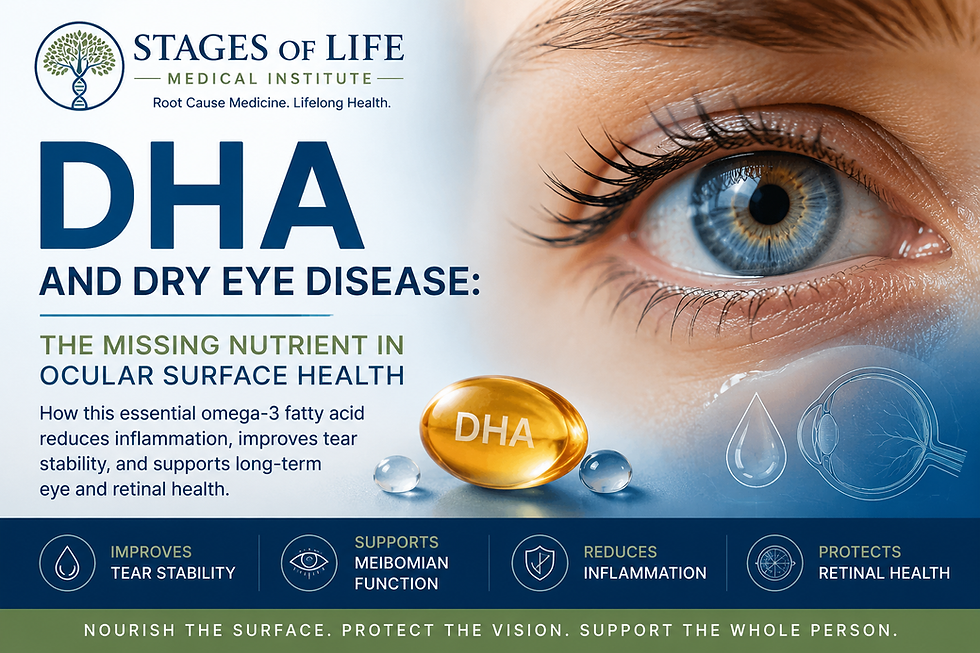
Why DHA is important to the retina and brain. DHA for dry eyes, DHA brain health

DHA is a structural component of retinal photoreceptors and neuronal membranes, linking two highly specialized tissues through a shared nutritional requirement.
DHA is a 22-carbon polyunsaturated fatty acid containing six double bonds. Its molecular structure contributes to the physical properties of cellular membranes. In the retina, DHA is especially abundant in the outer segments of rod and cone photoreceptors, where it supports the molecular environment required for visual signaling.
In the brain, DHA is incorporated into neuronal membranes, where it participates in membrane organization, synaptic function, and cellular signaling. DHA is also a precursor to specialized lipid mediators, including neuroprotectin D1, which have been investigated for their roles in regulating inflammatory responses and cellular survival.
These functions explain why DHA is essential to normal physiology. However, the fact that DHA is essential does not mean that taking additional DHA necessarily improves eye symptoms or memory.
That distinction is central to understanding the research.
Can DHA improve dry eye disease?
Dry eye disease develops when the tear film cannot adequately protect and lubricate the ocular surface. Patients may experience burning, irritation, fluctuating vision, redness, or a sensation of sand or grit in the eyes.
Two major mechanisms are involved:
Aqueous-deficient dry eye: The lacrimal glands do not produce sufficient tears.
Evaporative dry eye: Tears evaporate too quickly, frequently because of meibomian gland dysfunction.
Many patients have features of both conditions. Because inflammation contributes to dry eye disease, researchers have investigated whether omega-3 fatty acids might improve tear-film stability and reduce ocular surface inflammation.
The landmark DREAM trial, published in the New England Journal of Medicine in 2018, enrolled 535 patients with moderate-to-severe dry eye disease.
Participants received either placebo or 3,000 mg daily of combined omega-3 fatty acids, consisting of 2,000 mg EPA and 1,000 mg DHA.
After 12 months, both groups experienced symptom improvement, but omega-3 supplementation did not provide a statistically significant advantage over placebo.¹
New England Journal of Medicine
Other smaller studies have reported improvements in selected patients, particularly those with meibomian gland dysfunction.
These differences suggest that the type of dry eye disease, formulation, dose, and individual patient characteristics may influence treatment response.
The appropriate conclusion is that omega-3 supplementation remains a possible adjunct for selected patients, not an established universal treatment for dry eye disease.

Why the type of omega-3 matters
Not all omega-3 fatty acids are identical.
Characteristic | DHA | EPA |
Retina | Major structural component | Smaller structural contribution |
Brain | Abundant in neuronal membranes | Present at much lower concentrations |
Inflammatory regulation | Precursor to specialized pro-resolving mediators | Also contributes to inflammatory regulation |
Dry eye studies | Usually combined with EPA | Usually combined with DHA |
Cognitive supplementation | Benefits remain inconsistent | Benefits remain inconsistent |
DHA has a particularly important structural role in the retina and brain, whereas EPA is extensively studied for its effects on lipid metabolism and inflammatory signaling.
Neither should be considered a substitute for the other in all circumstances. For patients selecting a supplement, the actual amount of EPA and DHA matters more than the total quantity of fish oil listed on the label.
DHA and the aging brain: Can it improve cognition?
The brain contains substantial quantities of DHA, particularly in neuronal membranes. DHA is useful to treat for dry eyes and DHA is beneficial for brain health
DHA participates in membrane function, synaptic signaling, and the maintenance of normal neurological physiology. Observational studies have associated higher fish consumption and certain omega-3 biomarkers with favorable cognitive outcomes. However, observational associations cannot establish that taking DHA supplements prevents cognitive decline.
Randomized clinical trials have produced mixed or disappointing results, particularly among older adults without significant nutritional deficiencies.
A particularly important recent study
A randomized trial published in 2026 evaluated 2,000 mg daily of DHA in 365 older adults without dementia who had low baseline dietary DHA intake and at least one dementia risk factor.
Supplementation increased DHA-related biomarkers in cerebrospinal fluid, demonstrating that DHA reached the central nervous system. Nevertheless, investigators found no significant improvement in cognitive performance or brain volume over 24 months.
This finding illustrates a fundamental principle of nutritional medicine:
Improving a biochemical marker does not necessarily improve a clinical outcome.
DHA remains essential to normal brain physiology, but high-dose supplementation has not been established as a treatment for memory loss or a method of preventing Alzheimer's disease.
There is considerable scientific interest in whether nutritional interventions introduced earlier in life might influence long-term neurological health. The hypothesis is reasonable. Neuronal membranes require adequate DHA, and nutritional status may influence cellular function over decades.
Yet several unanswered questions remain.
Does baseline DHA deficiency influence treatment response? Does age affect the brain's ability to incorporate DHA? Do genetic factors, including APOE genotype, modify omega-3 metabolism? Could dietary patterns be more important than isolated supplementation?
These questions deserve further investigation.
At present, there is insufficient evidence to recommend DHA supplementation specifically to prevent dementia, even though adequate omega-3 intake remains part of a healthy dietary pattern.

How much DHA should you take?
There is no established therapeutic dose of DHA that has been proven to improve both dry eye symptoms and cognitive function. Nutritional requirements also differ from the higher doses used in clinical trials.
For general health, consuming fatty fish approximately twice weekly is a reasonable dietary approach consistent with major cardiovascular nutrition recommendations. Patients who rarely consume seafood may consider a DHA-containing supplement, particularly if dietary intake is inadequate.
When evaluating a supplement, consider the following:
Consideration | Why it matters |
DHA content | Identifies the amount of DHA rather than total fish oil |
EPA content | Helps establish the combined omega-3 formulation |
Product purity | Third-party testing can assess oxidation and contaminants |
Dietary intake | Determines whether supplementation addresses a nutritional gap |
Medical history | Helps identify contraindications and precautions |
Clinical goals | Distinguishes nutritional adequacy from unproven therapeutic claims |
High-dose omega-3 supplementation deserves particular caution in patients with atrial fibrillation risk factors. Patients taking anticoagulants or antiplatelet medications should also discuss supplementation with their clinician.

Can DHA deficiency be measured?
The omega-3 index measures EPA and DHA in red blood cell membranes, expressed as a percentage of total erythrocyte fatty acids. It provides an estimate of longer-term omega-3 status and has been investigated extensively in cardiovascular research.
However, an omega-3 index is not an established diagnostic test for dry eye disease, DHA deficiency in the brain, or cognitive impairment. It may be useful when evaluating dietary intake and supplement adherence, but there is no validated omega-3 index threshold that guarantees improved eye comfort or memory.
What should your doctor evaluate before recommending DHA?
For patients with dry eyes, assessment should include the ocular surface, tear production, tear-film stability, and meibomian gland function.
Other contributors may include Sjögren disease, thyroid-associated eye disease, medications, contact lens use, and environmental exposures.
For patients experiencing cognitive difficulties, a broader assessment may identify potentially reversible contributors, including thyroid dysfunction, vitamin B12 deficiency, sleep disorders, depression, medication effects, and hearing impairment.
A supplement should not become a substitute for diagnosis.
Clinical Pearl
Dry eye symptoms and cognitive complaints are common with advancing age, but their coexistence does not establish a shared DHA deficiency. DHA has an important structural role in both retinal photoreceptors and neuronal membranes. Nevertheless, tissue concentrations, dietary intake, and clinical response are not interchangeable measures.
The most useful question is not simply whether a patient should take DHA, but whether an identifiable nutritional deficiency or other treatable condition is contributing to the patient's symptoms.
Food first: Natural sources of DHA
The richest dietary sources of preformed DHA include salmon, sardines, herring, mackerel, and trout.
Algal oil provides a vegetarian source of DHA.
Walnuts, chia seeds, and flaxseed contain alpha-linolenic acid (ALA), another omega-3 fatty acid. Although the body can convert some ALA into EPA and DHA, conversion to DHA is generally limited.
Consequently, plant foods rich in ALA are nutritionally valuable but are not equivalent to consuming preformed DHA.
The future: Personalized omega-3 nutrition
One promising direction in nutritional medicine is moving beyond uniform supplementation toward individualized assessment.
Future research may help determine whether baseline omega-3 status, genetics, age, dietary patterns, and disease characteristics can identify patients more likely to benefit.
For dry eye disease, investigators may be able to distinguish patients whose ocular surface inflammation responds to specific omega-3 formulations.
For cognitive health, research may clarify whether DHA metabolism, rather than simply DHA intake, is the more important determinant of neurological outcomes.
These remain investigational possibilities rather than established clinical recommendations.
Frequently Asked Questions
Can DHA cure dry eye disease?
No. Clinical trials have not demonstrated that DHA cures dry eye disease. Some omega-3 formulations may benefit selected patients, but results are inconsistent.
Is DHA better than EPA for memory?
DHA is more abundant in neuronal membranes, but this does not establish that DHA supplementation improves memory more effectively than EPA.
Can DHA prevent Alzheimer's disease?
There is insufficient randomized clinical evidence to support DHA supplementation as an effective Alzheimer's prevention strategy.
How long does DHA take to work?
Blood and tissue omega-3 levels change over weeks to months. However, there is no established treatment interval that reliably produces improvement in dry eye symptoms or neurovascular complaints. It is a months to a year, in most cases
Can I take DHA with other supplements?
Often, but the complete medication and supplement regimen should be reviewed for duplication, excessive dosing, and potential interactions.
Bottom Line
DHA is an essential structural component of both the retina and the brain, providing a fascinating biological connection between visual and cognitive health. Maintaining adequate DHA intake is a reasonable nutritional objective, particularly for individuals who consume little seafood.
However, evidence that additional DHA supplementation improves dry eye symptoms remains inconsistent, and randomized clinical trials have not established reliable cognitive benefits or prevention of dementia.
The most effective strategy combines sound nutrition, careful diagnosis, individualized treatment, and attention to modifiable risks affecting both ocular and neurological health.
At Stages of Life Medical Institute, we believe symptoms rarely occur in isolation. Understanding the relationships among nutrition, metabolism, inflammation, and organ function allows us to evaluate health more comprehensively and identify opportunities for prevention.
Medical References
Asbell PA, Maguire MG, Pistilli M, et al. n−3 Fatty Acid Supplementation for the Treatment of Dry Eye Disease. N Engl J Med. 2018;378:1681–1690. PubMed.
Christen WG, et al. Efficacy of Marine ω-3 Fatty Acid Supplementation vs Placebo in Reducing Incidence of Dry Eye Disease in Healthy US Adults. JAMA Ophthalmol. 2022. PubMed.
Eom Y, et al. Re-Esterified Triglyceride ω-3 Fatty Acids in Dry Eye Disease With Meibomian Gland Dysfunction. JAMA Ophthalmol. 2024. PubMed.
Andrieu S, et al. Effect of long-term omega 3 polyunsaturated fatty acid supplementation with or without multidomain intervention on cognitive function in elderly adults with memory complaints (MAPT). Lancet Neurol. 2017;16:377–389. PubMed.
Brainard JS, et al. Omega-3, Omega-6, and Polyunsaturated Fat for Cognition: Systematic Review and Meta-analysis of Randomized Trials. J Am Med Dir Assoc. 2020. PubMed.
CNS target engagement of high-dose DHA supplementation in older adults at risk for dementia: a randomised, double-blind, placebo-controlled trial. 2026. PubMed.
PubMed
National Institutes of Health, Office of Dietary Supplements. Omega-3 Fatty Acids: Health Professional Fact Sheet.
Continue Your Journey with Stages of Life Vitamins
Adequate omega-3 nutrition is one component of a comprehensive approach to long-term health. When considering DHA supplementation, patients should examine the actual DHA and EPA content, product quality, and their individual nutritional needs.
Explore our nutritional catalog and discuss appropriate omega-3 supplementation with your healthcare professional.
Further Reading:
Discover how sleep, cerebrospinal fluid movement, and the brain's waste-clearance pathways may influence cognitive aging. This article complements DHA's role in maintaining neuronal health.
Explore research linking vitamin D status with tau protein accumulation and long-term brain health, illustrating why nutritional factors deserve consideration in healthy aging.
3. Insulin Resistance: The Hidden Precursor to Cardiovascular Disease, Dementia, and Accelerated Aging
Learn how insulin resistance, metabolic dysfunction, and vascular health may influence cognitive decline. This provides important context beyond omega-3 supplementation.
Understand why memory problems do not always indicate Alzheimer's disease. Thyroid disorders, nutritional deficiencies, sleep disturbances, and medication effects may contribute to treatable cognitive symptoms.
Review how certain prescription and over-the-counter medications can affect memory, concentration, and mental clarity—an important consideration before relying on supplements for cognitive complaints.
Become a Patient
At Stages of Life Medical Institute, we combine conventional medical evaluation, advanced laboratory assessment, and evidence-informed nutritional strategies to help patients understand the factors influencing their health. Our goal is not simply to address symptoms, but to identify opportunities for healthier aging and improved long-term function.
Medical Disclaimer: This article is intended for educational purposes and does not replace individualized medical advice, diagnosis, or treatment. Dietary supplements are not intended to diagnose, treat, cure, or prevent disease.
The medical references cited in this article are provided for educational purposes only and are intended to support general scientific discussion. They are not a substitute for individualized medical advice, diagnosis, or treatment. Clinical decisions should always be made in consultation with a qualified healthcare professional who can account for a patient’s unique medical history, medications, and circumstances.


1917 Boothe Circle, Suite 171
Longwood, Florida 32750
Tel: 407-679-3337
Fax: 407-678-7246

© 2026 Stages of Life Medical Institute. All rights reserved.


Comments