


N-Acetyl Cysteine (NAC) and Addiction Recovery

Can NAC Help Reduce Cravings for Tobacco, Alcohol, Opioids, and Cocaine?
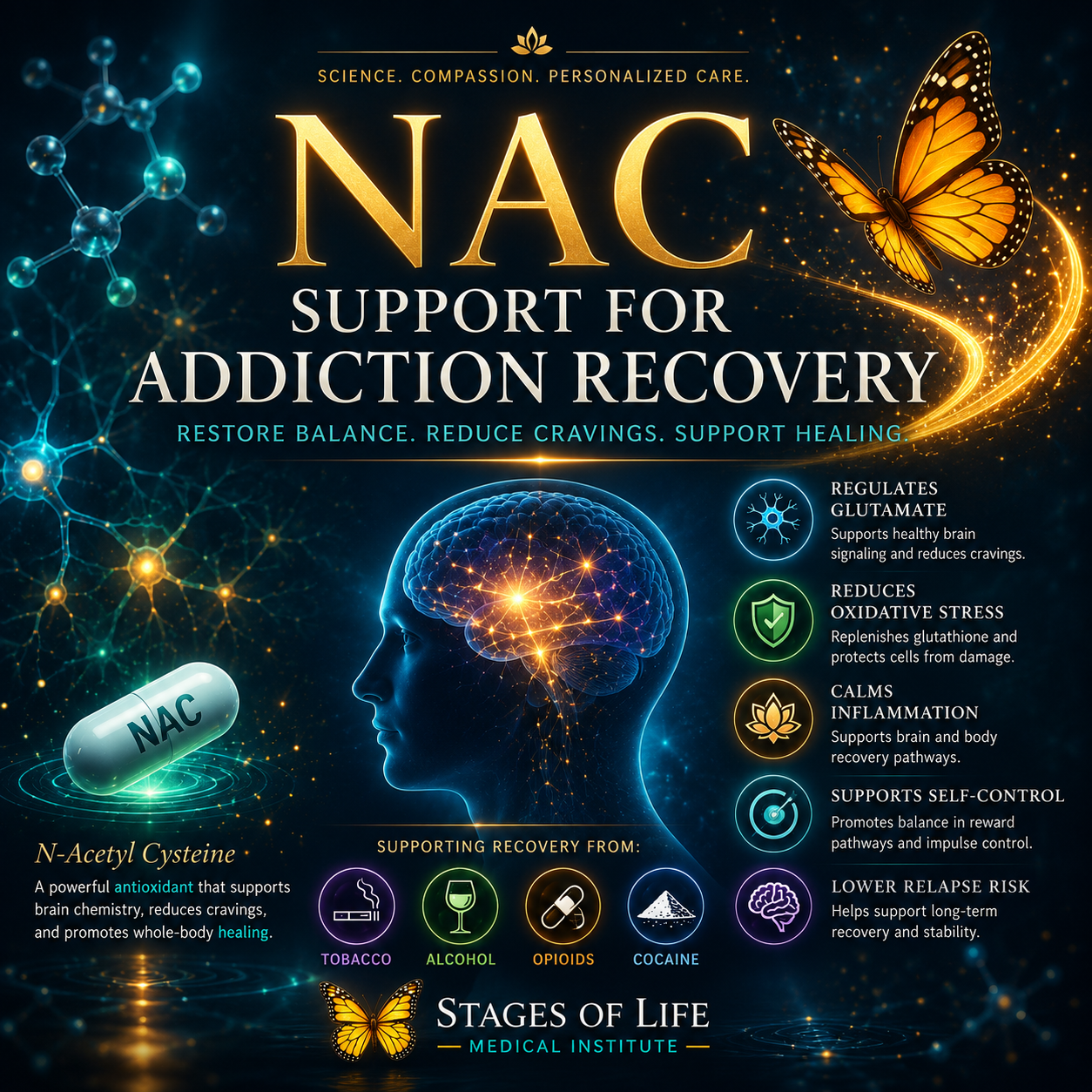
Addiction affects millions of individuals and families each year. Whether involving nicotine, alcohol, opioids, or stimulants such as cocaine, addiction alters brain chemistry, increases inflammation, disrupts decision-making pathways, and creates powerful cravings that make recovery difficult.
Traditional addiction treatment remains essential and may include:
Counseling
Behavioral therapy
Medication-assisted treatment
Structured recovery programs
Psychiatric support
However, researchers are increasingly studying whether certain nutritional and metabolic therapies may help support recovery and reduce relapse risk. One of the most promising compounds under investigation is N-acetyl cysteine (NAC).
NAC is a medically recognized compound that has been used for decades in emergency medicine, pulmonary disease, and liver protection. More recently, research has explored its potential role in addiction medicine because of its effects on:
Glutamate regulation
Oxidative stress
Neuroinflammation
Dopamine signaling
Compulsive behavior pathways
Although NAC is not a cure for addiction, it may represent a valuable supportive therapy when used alongside appropriate medical and psychological treatment.
What Is NAC?
N-acetyl cysteine is a modified form of the amino acid cysteine. Its most important role is helping the body produce glutathione, one of the body’s most critical antioxidants.
Glutathione helps protect cells from:
Oxidative stress
Toxic injury
Inflammation
Mitochondrial dysfunction
Substance abuse significantly depletes glutathione stores, particularly in the:
Brain
Liver
Cardiovascular system
Immune system
By restoring glutathione levels, NAC may help support cellular recovery during addiction treatment.
Why Addiction Changes the Brain
Addictive substances directly affect the brain’s reward circuitry.
Repeated exposure to nicotine, alcohol, opioids, or cocaine may alter:
Dopamine release
Glutamate signaling
Impulse control pathways
Stress response systems
Emotional regulation
Over time, the brain becomes conditioned to seek the substance despite harmful consequences.
This may lead to:
Intense cravings
Anxiety
Depression
Compulsive behavior
Poor judgment
Relapse cycles
Researchers now believe that glutamate imbalance and neuroinflammation play major roles in maintaining addiction.

How NAC May Help Addiction Recovery
1. Restoration of Glutamate Balance
One of NAC’s most important actions involves regulating glutamate activity within the brain’s reward pathways.
Glutamate is a major neurotransmitter involved in:
Learning
Motivation
Habit formation
Craving behavior
Substance abuse can disrupt glutamate signaling, reinforcing compulsive drug-seeking behavior.
NAC appears to help normalize this pathway, potentially reducing:
Cravings
Cue-triggered urges
Relapse behavior
This mechanism is one reason NAC has attracted attention in addiction research.

2. Reduction of Oxidative Stress
Substance dependence produces tremendous oxidative stress throughout the body.
Alcohol, nicotine, opioids, and cocaine all increase:
Free radical formation
Cellular inflammation
Mitochondrial dysfunction
Neuronal injury
These changes may contribute to:
Mood instability
Brain fog
Fatigue
Anxiety
Cognitive impairment
NAC replenishes glutathione and may help reduce this oxidative burden.
3. Neuroinflammation and Brain Recovery
Chronic inflammation within the brain is increasingly associated with:
Addiction
Depression
Anxiety disorders
Relapse risk
NAC demonstrates anti-inflammatory effects that may help stabilize neuronal function during recovery.
Researchers believe this may improve:
Emotional regulation
Stress tolerance
Neurologic recovery
Behavioral control
NAC and Tobacco Addiction
Nicotine addiction remains one of the most difficult dependencies to overcome.
Studies involving NAC suggest possible reductions in:
Cigarette cravings
Smoking urges
Compulsive smoking behavior
Cue-triggered nicotine use
Some patients also report:
Less emotional attachment to smoking
Improved stress control
Reduced relapse tendency
NAC may be especially useful when combined with:
Smoking cessation counseling
Nicotine replacement therapy
Stress management programs
Behavioral therapy
NAC and Alcohol Use Disorder
Alcohol abuse damages both the brain and liver through:
Oxidative stress
Inflammation
Glutamate disruption
Nutritional depletion
NAC is particularly interesting in alcohol recovery because it may:
Support liver glutathione production
Reduce oxidative injury
Improve cellular recovery
Lower craving intensity in some individuals
Its liver-protective properties are well established in other areas of medicine.

NAC and Cocaine Addiction
Some of the strongest addiction-related NAC research involves cocaine dependence.
Researchers have observed possible reductions in:
Cocaine cravings
Drug-seeking behavior
Relapse triggers
Cocaine profoundly disrupts dopamine and glutamate pathways, making relapse extremely common.
NAC’s ability to help stabilize glutamate signaling may partially explain its benefit in stimulant addiction recovery programs.
NAC and Opioid Dependence
Opioid addiction affects:
Reward circuitry
Stress response systems
Dopamine pathways
Inflammatory signaling
Early studies suggest NAC may help:
Reduce craving intensity
Improve withdrawal tolerance
Support neurologic stabilization
Interest continues to grow regarding NAC as an adjunctive therapy alongside:
Medication-assisted treatment
Behavioral counseling
Long-term recovery programs
Typical NAC Dosages Used in Studies
Doses used in addiction-related studies commonly range from:
600 mg daily to 2400 mg daily in divided doses
Many clinicians begin with lower doses and gradually increase as tolerated.
Because supplement quality varies significantly, professional-grade products are preferred.
Potential Side Effects
NAC is generally well tolerated, but possible side effects include:
Nausea
Bloating
Reflux
Loose stools
Headache
Rarely:
Bronchospasm in asthma patients
Histamine-related reactions
Medication interactions
Patients undergoing addiction treatment should discuss NAC use with their physician before beginning supplementation.
Addiction Is a Medical Disease — Not a Personal Failure
Addiction changes brain chemistry, emotional regulation, and stress physiology.
Recovery often requires:
Long-term support
Structured treatment
Medical supervision
Psychological care
Social stabilization
NAC should be viewed as a supportive metabolic therapy — not a replacement for professional addiction treatment.
Still, its combination of:
antioxidant protection,
glutamate regulation,
anti-inflammatory effects,
and favorable safety profile
makes it one of the more promising integrative therapies currently being studied in addiction medicine.
Bottom Line
N-acetyl cysteine (NAC) is emerging as a potentially valuable adjunctive therapy in addiction recovery. Research suggests it may help reduce cravings and compulsive behavior associated with tobacco, alcohol, cocaine, and opioid dependence by restoring glutamate balance, replenishing glutathione, and reducing neuroinflammation.
Although NAC is not a cure for addiction, it may provide meaningful physiologic support when integrated into a comprehensive physician-guided recovery program.
Related Topics
Readers interested in NAC and addiction recovery may also benefit from these related articles from Stages of Life Medical Institute Blog:
NAC and Bipolar Disorder Support
TUDCA Benefits and Cellular Protection
Insulin Resistance and Accelerated Aging
Vitamin E and Neurologic Protection
Berberine and Metabolic Health
Become a Patient
At Stages of Life Medical Institute, we evaluate neurologic, metabolic, inflammatory, hormonal, and nutritional contributors to chronic disease using an integrative physician-led approach.
References
Deepmala, et al. Clinical trials of N-acetylcysteine in psychiatry and neurology: A systematic review. Neurosci Biobehav Rev. 2015;55:294-321. PMID: 26187325.
McClure EA, et al. Potential role of N-acetylcysteine in the management of substance use disorders. CNS Drugs. 2014;28(2):95-106. PMID: 24442756.
LaRowe SD, et al. Is cocaine desire reduced by N-acetylcysteine? Am J Psychiatry. 2007;164(7):1115-1117. PMID: 17606664.
Knackstedt LA, et al. The role of cystine-glutamate exchange in nicotine dependence. Biol Psychiatry. 2009;65(10):841-845. PMID: 19103434.
Zhou W, Kalivas PW. N-acetylcysteine reduces extinction responding and induces enduring reductions in cue- and heroin-induced drug-seeking. Biol Psychiatry. 2008;63(3):338-340. PMID: 17719565.
Berk M, et al. N-acetyl cysteine for depressive symptoms in bipolar disorder. Biol Psychiatry. 2008;64(6):468-475. PMID: 18436195.
Millea PJ. N-acetylcysteine: Multiple clinical applications. Am Fam Physician. 2009;80(3):265-269. PMID: 19621856.
Grant JE, et al. N-acetyl cysteine, a glutamate-modulating agent, in the treatment of pathological gambling. Biol Psychiatry. 2007;62(6):652-657. PMID: 17210175.
Dean O, et al. Glutathione depletion in psychiatric and neurodegenerative disorders. Mol Psychiatry. 2011;16(12):1223-1238. PMID: 22083740.
Squeglia LM, et al. The utility of N-acetylcysteine in substance use disorders and related psychiatric conditions. Subst Abuse. 2018;12:1-17. PMID: 30013359.
The medical references cited in this article are provided for educational purposes only and are intended to support general scientific discussion. They are not a substitute for individualized medical advice, diagnosis, or treatment. Clinical decisions should always be made in consultation with a qualified healthcare professional who can account for a patient’s unique medical history, medications, and circumstances.


1917 Boothe Circle, Suite 171
Longwood, Florida 32750
Tel: 407-679-3337
Fax: 407-678-7246


.webp)