


Green Tea Extract and Liver Health: Can It Help Hepatitis, NAFLD, NASH, and MASH?


Green Tea Extract and the Modern Liver Disease Epidemic
Fatty liver disease has become one of the most common chronic diseases worldwide. Millions of adults develop excessive fat accumulation within the liver long before symptoms appear. Over time, this condition may progress toward inflammation, fibrosis, cirrhosis, liver failure, and liver cancer.
The terminology surrounding fatty liver disease is also changing. NAFLD (Non-Alcoholic Fatty Liver Disease) is increasingly referred to as MASLD (Metabolic Dysfunction-Associated Steatotic Liver Disease), while NASH (Non-Alcoholic Steatohepatitis) is increasingly termed MASH (Metabolic Dysfunction-Associated Steatohepatitis).
One nutritional intervention receiving growing scientific attention is green tea extract, particularly because of its high concentration of catechin antioxidants.
The most studied compound in green tea extract is epigallocatechin gallate (EGCG).
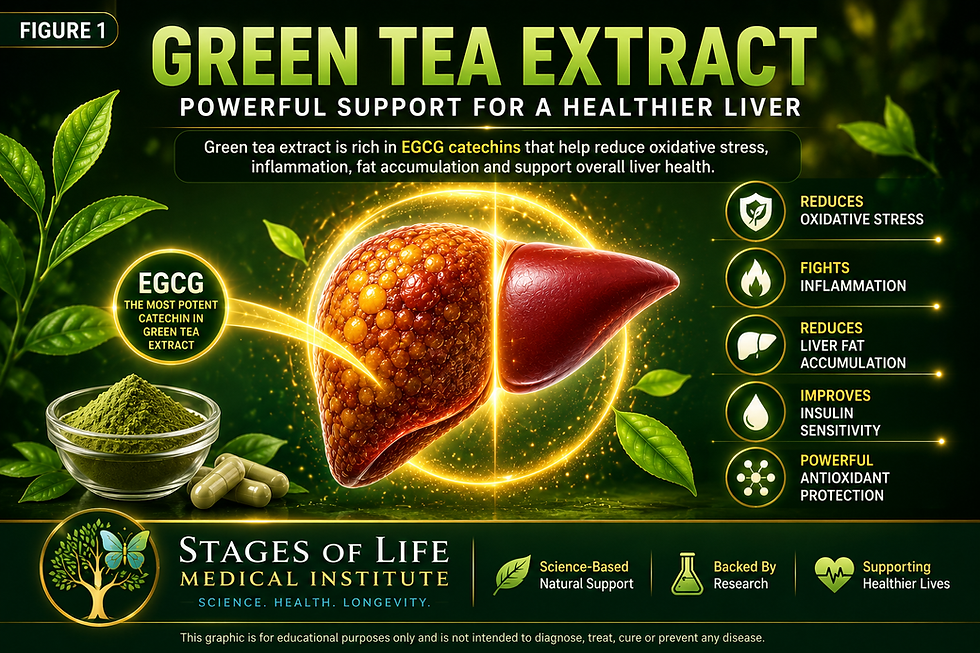
Emerging evidence suggests EGCG may help reduce oxidative stress, insulin resistance, inflammation, and hepatic fat accumulation—key drivers involved in fatty liver disease progression.
What Is Green Tea Extract?
Green tea extract is a concentrated form of compounds derived from the leaves of Camellia sinensis. Unlike brewed tea, extracts may contain substantially higher concentrations of biologically active catechins.
Key active compounds include:
EGCG (epigallocatechin gallate)
Epicatechin
Epicatechin gallate
Epigallocatechin
Among these, EGCG appears to exert the strongest metabolic and anti-inflammatory effects.
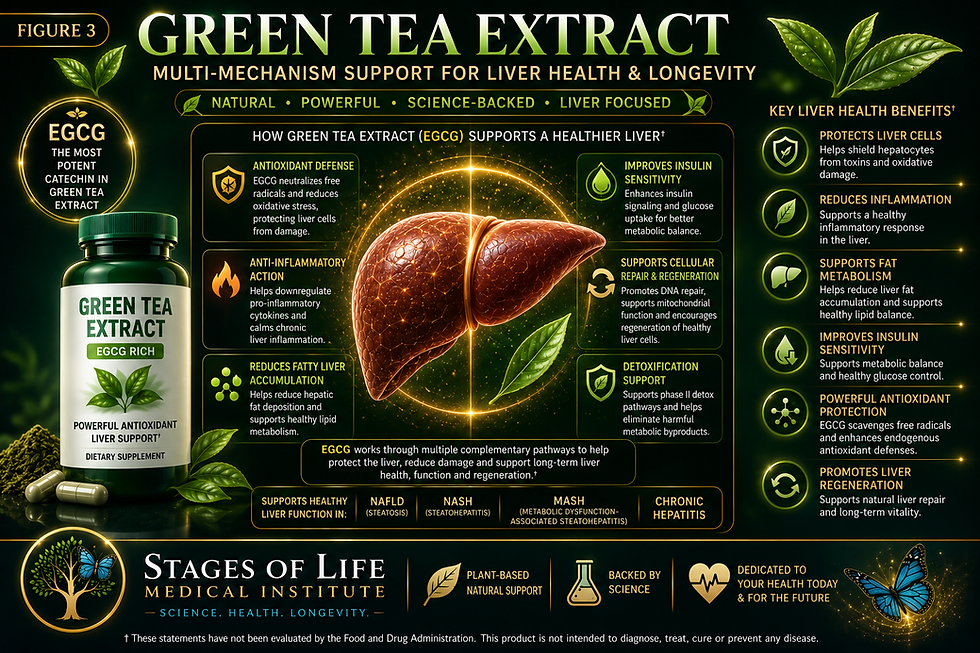
Potential liver-related mechanisms include:
Reduction of oxidative stress
Improvement in insulin sensitivity
Reduction in hepatic fat accumulation
Modulation of inflammatory cytokines
Protection against mitochondrial injury
Reduction in fibrotic signaling pathways
These actions are particularly important because insulin resistance and oxidative injury are central mechanisms driving NAFLD and MASH.
NAFLD affects approximately one-quarter of adults globally and is strongly associated with:
Obesity
Insulin resistance
Type 2 diabetes
Elevated triglycerides
Metabolic syndrome
Several studies suggest green tea extract may improve metabolic and inflammatory markers associated with fatty liver disease.
Potential benefits include:
Lower ALT and AST liver enzyme levels
Reduced hepatic fat accumulation
Improved insulin sensitivity
Reduced inflammatory signaling
Decreased oxidative liver injury
Some human imaging studies demonstrated reductions in liver fat content following supplementation with standardized green tea extract preparations.
Green tea extract may also modestly support:
Thermogenesis
Fat oxidation
Weight reduction
These metabolic effects may indirectly improve fatty liver disease progression. However, green tea extract should be viewed as a supportive adjunct—not a stand-alone therapy.
The strongest improvements in fatty liver disease still result from:
Weight reduction
Reduction in processed carbohydrates
Exercise
Improved insulin sensitivity
Alcohol reduction
Sleep optimization
Green Tea Extract and NASH / MASH
NASH/MASH represents a more dangerous stage of fatty liver disease characterized by inflammation and liver cell injury.
This stage increases the risk of:
Fibrosis
Cirrhosis
Portal hypertension
Liver failure
Hepatocellular carcinoma
Research suggests EGCG may interfere with several pathways involved in disease progression.
Experimental studies demonstrate potential reductions in:
TNF-alpha signaling
NF-kB activation
Oxidative stress
Stellate cell activation
Fibrotic signaling pathways
Investigators believe these mechanisms may help slow progression from simple fatty liver disease toward fibrosis and cirrhosis.
Although promising, green tea extract should still be considered part of a comprehensive physician-directed metabolic recovery strategy.

Green Tea Extract and Viral Hepatitis
Chronic hepatitis B and hepatitis C remain major causes of cirrhosis and liver cancer worldwide.
Laboratory studies suggest EGCG may possess:
Anti-inflammatory properties
Antioxidant effects
Potential antiviral activity
Anti-fibrotic signaling effects
Some experimental research indicates catechins may interfere with viral entry and replication pathways.
Potential supportive benefits include:
Reduction in oxidative liver injury
Reduction in inflammatory signaling
Possible reduction in fibrosis progression
Importantly, green tea extract is not a replacement for antiviral therapy.
Modern antiviral medications remain the standard of care for hepatitis B and hepatitis C management.
Green tea extract should instead be viewed as a potential complementary metabolic and antioxidant support strategy.

An Important Safety Discussion
Although green tea extract may provide benefits, concentrated extracts also carry important safety considerations.
Unlike moderate consumption of brewed green tea, high-dose concentrated extracts have occasionally been associated with liver injury in susceptible individuals.
This appears more common with:
Excessive dosing
Highly concentrated products
Weight-loss formulations
Use during fasting states
Patients with liver disease should:
Use physician-guided dosing
Avoid excessive intake
Choose reputable manufacturers
Avoid combining multiple stimulant-containing supplements
Moderation and product quality are critically important.
Practical Clinical Considerations
Patients considering green tea extract for liver support should focus on comprehensive metabolic rehabilitation.
Helpful strategies may include:
Mediterranean-style nutrition
Weight reduction
Reduction in fructose and processed foods
Exercise
Sleep optimization
Insulin resistance treatment
Alcohol reduction
Comprehensive laboratory monitoring
Common laboratory evaluations may include:
ALT
AST
GGT
Fasting insulin
Hemoglobin A1c
Lipid panel
Ferritin
Fibrosis scoring tools
Liver ultrasound or elastography
Green tea extract may function best as part of a broader physician-directed metabolic and inflammatory recovery strategy.
Bottom Line
Green tea extract contains concentrated catechins—particularly EGCG—that may help support liver health in patients with NAFLD, MASLD, NASH, MASH, and chronic hepatitis.
Emerging evidence suggests benefits involving oxidative stress reduction, inflammatory modulation, insulin resistance improvement, and possible protection against fibrosis progression.
Although promising, green tea extract is not a replacement for physician-guided medical care. Instead, it may serve as a supportive adjunctive strategy within a comprehensive liver health program focused on metabolic recovery and inflammation reduction.
Related Topics
Become a Patient
At Stages of Life Medical Institute, we evaluate metabolic health, insulin resistance, inflammatory burden, and liver function using comprehensive physician-directed laboratory testing and individualized treatment strategies.
For patients concerned about fatty liver disease, metabolic syndrome, chronic inflammation, or liver health optimization, comprehensive evaluation may help identify reversible contributors before advanced liver disease develops.
References
Masterjohn C, Bruno RS. Therapeutic potential of green tea in nonalcoholic fatty liver disease. Nutr Rev. 2012;70(1):41-56. PubMed: https://pubmed.ncbi.nlm.nih.gov/22221216/
Bose M, Lambert JD, Ju J, et al. The major green tea polyphenol, EGCG, inhibits obesity, metabolic syndrome, and fatty liver disease in high-fat-fed mice. J Nutr. 2008;138(9):1677-1683. PubMed: https://pubmed.ncbi.nlm.nih.gov/18716169/
Sakata R, Nakamura T, Torimura T, et al. Green tea polyphenol treatment for NAFLD. World J Gastroenterol. 2013;19(29):4779-4786. PubMed: https://pubmed.ncbi.nlm.nih.gov/23922470/
Li Y, Rahman SU, Huang Y, et al. Green tea catechins and liver disease. Nutrients. 2020;12(9):2659. PubMed: https://pubmed.ncbi.nlm.nih.gov/32899529/
Singh BN, Shankar S, Srivastava RK. EGCG: mechanisms and clinical implications. Biochem Pharmacol. 2011;82(12):1807-1821. PubMed: https://pubmed.ncbi.nlm.nih.gov/21827739/
Chen IJ, Liu CY, Chiu JP, Hsu CH. Therapeutic effect of high-dose green tea extract on weight reduction. Clin Nutr. 2016;35(3):592-599. PubMed: https://pubmed.ncbi.nlm.nih.gov/26093535/
Hursel R, Westerterp-Plantenga MS. Catechin- and caffeine-rich teas for body composition. Am J Clin Nutr. 2013;98(6 Suppl):1682S-1693S. PubMed: https://pubmed.ncbi.nlm.nih.gov/24172304/
National Institute of Diabetes and Digestive and Kidney Diseases. Green Tea. LiverTox. PubMed: https://pubmed.ncbi.nlm.nih.gov/31643954/
Federico A, Dallio M, Loguercio C. Nutraceuticals in chronic liver disease. World J Gastroenterol. 2017;23(27):4770-4783. PubMed: https://pubmed.ncbi.nlm.nih.gov/28740316/
Shen CL, Cao JJ, Dagda RY, et al. Green tea polyphenols and metabolic health. Nutr Res. 2012;32(6):448-457. PubMed: https://pubmed.ncbi.nlm.nih.gov/22749178/
REFERENCES
The medical references cited in this article are provided for educational purposes only and are intended to support general scientific discussion. They are not a substitute for individualized medical advice, diagnosis, or treatment. Clinical decisions should always be made in consultation with a qualified healthcare professional who can account for a patient’s unique medical history, medications, and circumstances.


1917 Boothe Circle, Suite 171
Longwood, Florida 32750
Tel: 407-679-3337
Fax: 407-678-7246


.webp)