


The Healing Power of Nourishment: Exploring the Potential of Food as Medicine

For most of human history, food was understood not only as sustenance but also as medicine. Modern nutritional science increasingly confirms what traditional healing systems long recognized: the foods we eat profoundly influence inflammation, metabolism, immune function, and disease risk.
In contemporary medicine, chronic illnesses such as cardiovascular disease, diabetes, autoimmune disorders, neurodegeneration, and chronic pain are now understood to be strongly influenced by metabolic and inflammatory pathways, many of which are directly affected by dietary patterns.
The concept of food as medicine therefore represents a return to a fundamental physiologic principle: nourishment shapes health at the cellular level.
Food as a Biological Signal
Food does far more than provide calories. Nutrients act as biochemical signals that regulate cellular function.
When we eat, thousands of molecular interactions occur that influence:
• Hormonal signaling
• Immune activity
• Gene expression (epigenetics)
• Mitochondrial energy production
• Inflammatory pathways
In essence, food communicates with our biology. Certain dietary patterns promote metabolic balance and cellular repair, while others drive inflammation and disease.¹²

Nutrients That Support Healing
Whole foods contain complex combinations of vitamins, minerals, phytonutrients, and healthy fats that work together to support physiologic balance.
Anti-Inflammatory Nutrients
Chronic inflammation is a common driver of many diseases. Several nutrients have well-described anti-inflammatory effects:
• Omega-3 fatty acids found in fatty fish
• Polyphenols present in berries, tea, and dark chocolate
• Curcumin from turmeric
• Oleocanthal in extra-virgin olive oil
These compounds help regulate inflammatory signaling pathways such as NF-κB, reducing cytokine production.³
Micronutrients Essential for Cellular Function
Many metabolic reactions depend on adequate micronutrient availability.
Examples include:
• Magnesium – supports nerve stability and mitochondrial energy production
• Selenium – essential for antioxidant enzymes and thyroid function
• Zinc – critical for immune regulation
• Vitamin D – functions as a hormone influencing immune and metabolic pathways
Deficiencies in these nutrients remain common and may contribute to chronic disease development.⁴
The Gut–Immune Connection
One of the most important discoveries in modern medicine is the relationship between diet, the gut microbiome, and immune regulation.
The human intestine contains trillions of microorganisms that interact with the immune system and influence systemic inflammation.
Diet strongly shapes this microbial ecosystem.
Foods that support a healthy microbiome include:
• Fiber-rich vegetables
• Whole fruits
• Legumes
• Fermented foods
• Polyphenol-rich plant foods
These foods promote the growth of beneficial bacteria that produce short-chain fatty acids, molecules that regulate immune balance and intestinal health.⁵

Ultra-Processed Foods and Chronic Disease
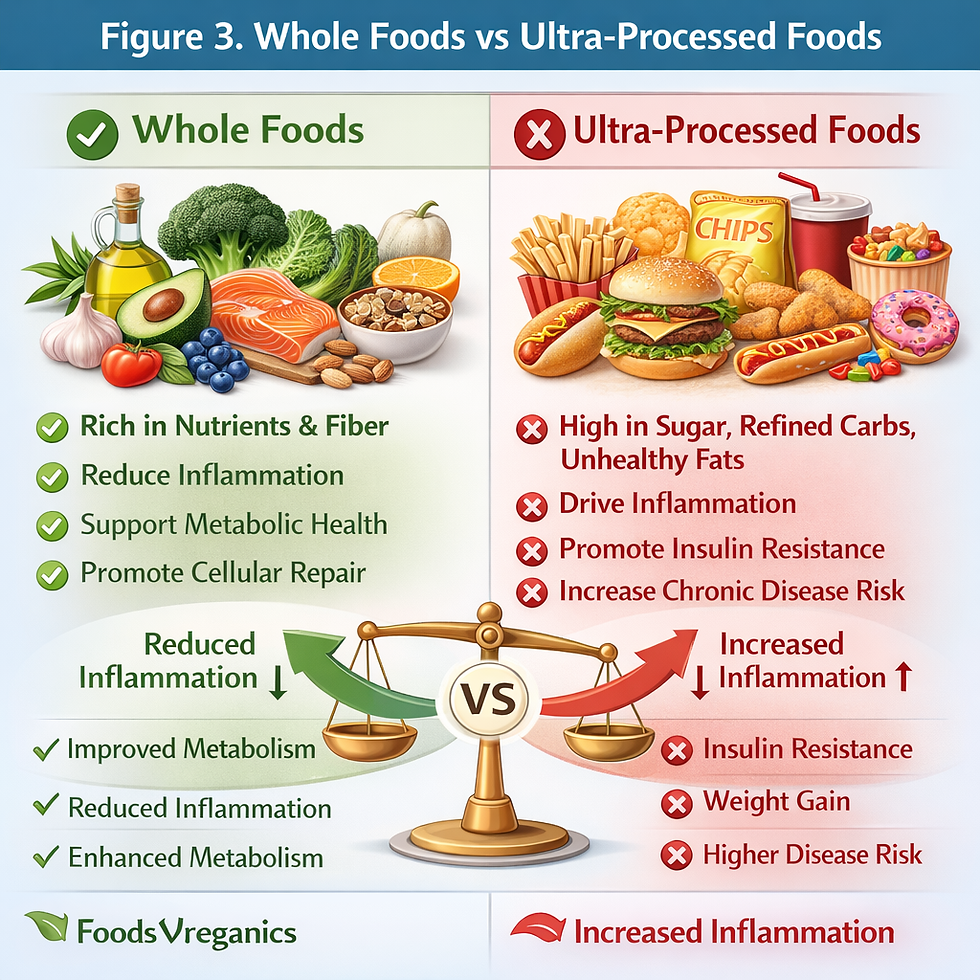
In contrast, diets high in ultra-processed foods can disrupt metabolic and immune signaling.
Ultra-processed foods often contain:
• Refined carbohydrates
• Industrial seed oils
• Artificial additives
• Excess sodium
• Low fiber content
Numerous studies now associate these dietary patterns with increased risk of:
• Cardiovascular disease
• Obesity
• Diabetes
• Depression
• Chronic inflammation
Reducing ultra-processed food intake is therefore one of the most effective ways to improve metabolic health.⁶
Practical Ways to Use Food as Medicine
Patients often ask what dietary pattern provides the greatest health benefit. Although many dietary frameworks exist, most evidence supports a few consistent principles.
A therapeutic nutrition pattern typically emphasizes:
• Whole, minimally processed foods
• Vegetables and fruits• Healthy fats such as olive oil and fish
• Nuts and seeds
• Adequate high-quality protein
Patterns such as the Mediterranean diet consistently demonstrate benefits for cardiovascular health, metabolic disease, and longevity.⁷
Food, Longevity, and Disease Prevention
The influence of diet extends far beyond symptom management.
Long-term dietary patterns shape the trajectory of health across the lifespan. Studies of longevity populations—including Mediterranean regions and other “Blue Zones”—demonstrate common nutritional characteristics:
• Plant-forward diets
• High intake of fiber and polyphenols
• Healthy fats
• Limited processed foods
These dietary patterns are associated with reduced risk of chronic disease and increased life expectancy.⁸
Bottom Line
Food is one of the most powerful determinants of health available to us. Beyond simple calories, nutrients act as biological signals that regulate inflammation, metabolism, immune function, and cellular repair.
Whole, nutrient-dense foods provide the molecular building blocks necessary for optimal physiologic function, while diets high in ultra-processed foods can drive chronic inflammation and disease.
By approaching nutrition intentionally, patients can harness the healing power of nourishment as a foundational component of long-term health.
Become a Patient
If you are seeking a comprehensive approach to improving health through nutrition, metabolic optimization, and lifestyle medicine, we would be pleased to help.
At Stages of Life Medical Institute, we evaluate health from a functional and preventive perspective—addressing the metabolic and inflammatory drivers of disease.
Our goal is to help patients achieve long-term wellness, resilience, and vitality.
👉 Become a Patienthttps://stagesoflifemedicalinstitute.com
References
Calder PC. Omega-3 fatty acids and inflammatory processes. Nutrients. 2010;2(3):355-374. https://pubmed.ncbi.nlm.nih.gov/22254027/
Afshin A, et al. Health effects of dietary risks in 195 countries. Lancet. 2019;393:1958-1972. https://pubmed.ncbi.nlm.nih.gov/30954305/
Aggarwal BB, et al. Targeting inflammatory pathways with curcumin. Biochem Pharmacol. 2013;85(9):1272-1280. https://pubmed.ncbi.nlm.nih.gov/23370131/
Manson JE, et al. Vitamin D deficiency and health consequences. N Engl J Med. 2016;375:1817-1820. https://pubmed.ncbi.nlm.nih.gov/27806221/
Koh A, et al. Role of the gut microbiome in metabolic disease. Cell. 2016;165:1332-1345. https://pubmed.ncbi.nlm.nih.gov/27259147/
Monteiro CA, et al. Ultra-processed foods and chronic disease risk. Public Health Nutr. 2018;21:5-17. https://pubmed.ncbi.nlm.nih.gov/28792567/
Estruch R, et al. Primary prevention of cardiovascular disease with a Mediterranean diet. N Engl J Med. 2013;368:1279-1290. https://pubmed.ncbi.nlm.nih.gov/23432189/
Longo VD, Anderson RM. Nutrition, longevity, and disease prevention. Cell. 2022;185:145-156. https://pubmed.ncbi.nlm.nih.gov/35085527/
The medical references cited in this article are provided for educational purposes only and are intended to support general scientific discussion. They are not a substitute for individualized medical advice, diagnosis, or treatment. Clinical decisions should always be made in consultation with a qualified healthcare professional who can account for a patient’s unique medical history, medications, and circumstances.


1917 Boothe Circle, Suite 171
Longwood, Florida 32750
Tel: 407-679-3337
Fax: 407-678-7246


.webp)