


Essential Vitamins and Supplements for Liver Health: Managing Fatty Liver Disease MASLD

Fatty liver disease MASLD (Metabolic dysfunction-associated steatotic liver disease) affects millions worldwide, often silently progressing without symptoms. Managing this condition involves lifestyle changes, but certain vitamins and supplements can support liver health and potentially slow disease progression. This post explores key nutrients backed by research that may help people living with fatty liver disease MASLD.

Understanding Fatty Liver Disease MASLD and Nutritional Needs
Fatty liver disease MASLD occurs when excess fat builds up in liver cells, often linked to obesity, insulin resistance, and metabolic syndrome. This fat accumulation can cause inflammation and damage, leading to fibrosis or cirrhosis if untreated.
Nutrition plays a crucial role in managing MASLD. While no vitamin or supplement alone can reverse the disease, certain nutrients support liver function, reduce oxidative stress, and improve metabolic health. These include antioxidants, vitamins involved in fat metabolism, and compounds that reduce inflammation.
Key Vitamins for Fatty Liver Disease MASLD
Vitamin E
Vitamin E is a powerful antioxidant that protects liver cells from oxidative damage caused by fat accumulation. Clinical trials have shown that vitamin E supplementation can improve liver enzyme levels and reduce inflammation in nonalcoholic fatty liver disease (NAFLD), a condition closely related to MASLD.
Typical dosage studied: 800 IU/day of alpha-tocopherol
Benefits: Reduced liver inflammation, improved liver histology
Caution: High doses may increase bleeding risk; consult a healthcare provider
Vitamin D
Low vitamin D levels are common in people with fatty liver disease MASLD and may worsen insulin resistance and liver fibrosis. Supplementing vitamin D can improve metabolic parameters and support immune regulation.
Recommended levels: Maintain serum 25(OH)D above 30 ng/mL, preferably 50-809 ng/ml
Effects: Improved insulin sensitivity, reduced liver fat accumulation
Sources: Sun exposure, fortified foods, supplements
B Vitamins
B-complex vitamins, especially B12, B6, and folate, are essential for liver metabolism and detoxification. Deficiencies can impair fat metabolism and increase homocysteine, a marker linked to liver damage.
Role: Support methylation processes and reduce oxidative stress
Food sources: Leafy greens, meat, eggs, fortified cereals
Supplementation: May be needed in cases of deficiency or poor absorption
Supplements That Support Liver Health in MASLD
Omega-3 Fatty Acids
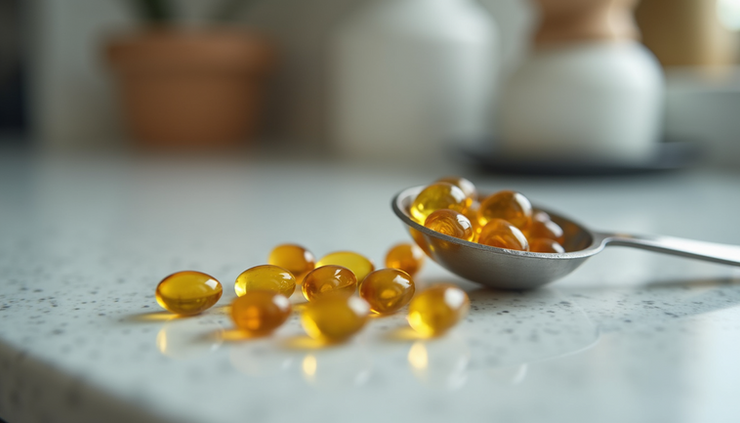
Omega-3s, found in fish oil, reduce liver fat and inflammation by modulating lipid metabolism and cytokine production. Studies show omega-3 supplementation lowers triglycerides and improves liver enzyme profiles in MASLD patients.
Dose: 2-4 grams/day of EPA and DHA combined
Benefits: Reduced liver fat, improved lipid profile
Considerations: Choose high-quality, purified fish oil supplements
Milk Thistle (Silymarin)
Milk thistle extract contains silymarin, a compound with antioxidant and anti-inflammatory properties. Research suggests it may protect liver cells and improve liver function tests in fatty liver disease MASLD.
Typical dose: 140-420 mg/day standardized extract
Effects: Reduced oxidative stress, improved liver enzyme levels
Safety: Generally well tolerated with minimal side effects
N-Acetylcysteine (NAC)
NAC replenishes glutathione, a critical antioxidant in liver detoxification. Supplementation may reduce oxidative damage and inflammation in MASLD.
Dose: 600-1200 mg/day
Benefits: Enhanced antioxidant defense, reduced liver injury markers
Use: Often combined with other antioxidants for synergistic effects

Lifestyle and Dietary Considerations to Enhance Supplement Benefits
Supplements work best alongside a balanced diet and lifestyle changes. For fatty liver disease MASLD, focus on:
Reducing intake of added sugars and refined carbohydrates
Eating plenty of fiber-rich vegetables and whole grains
Maintaining a healthy weight through regular physical activity
Avoiding excessive alcohol consumption
Combining these habits with targeted supplementation can improve liver outcomes and overall metabolic health.
Monitoring and Safety
Before starting any vitamin or supplement, consult a healthcare provider. Some supplements can interact with medications or cause side effects. Regular monitoring of liver enzymes and vitamin levels helps tailor treatment and avoid complications.

Final Thoughts on Managing Fatty Liver Disease MASLD with Vitamins and Supplements
Managing fatty liver disease MASLD requires a comprehensive approach. Vitamins and supplements can support liver health by reducing oxidative stress, improving metabolism, and lowering inflammation. However, they are part of a broader strategy that includes diet, exercise, and medical care.
If you have fatty liver disease MASLD, discuss supplementation with your healthcare provider to ensure safety and effectiveness. Taking informed steps can help protect your liver and improve your quality of life.
References
Sanyal AJ, et al. Pioglitazone, vitamin E, or placebo for nonalcoholic steatohepatitis. N Engl J Med. 2010;362(18):1675-1685.PubMed: https://pubmed.ncbi.nlm.nih.gov/20427778DOI: https://doi.org/10.1056/NEJMoa0907929
Barchetta I, et al. Vitamin D and nonalcoholic fatty liver disease. World J Gastroenterol. 2017;23(19):3407-3417.PubMed: https://pubmed.ncbi.nlm.nih.gov/28611504DOI: https://doi.org/10.3748/wjg.v23.i19.3407
Zelber-Sagi S, et al. Omega-3 fatty acids for the treatment of nonalcoholic fatty liver disease: a systematic review. J Hepatol. 2011;54(4):860-865.PubMed: https://pubmed.ncbi.nlm.nih.gov/21195464DOI: https://doi.org/10.1016/j.jhep.2010.11.010
Loguercio C, et al. Silybin and the liver: from basic research to clinical practice. World J Gastroenterol. 2011;17(18):2288-2301.PubMed: https://pubmed.ncbi.nlm.nih.gov/21633595DOI: https://doi.org/10.3748/wjg.v17.i18.2288
Sookoian S, Pirola CJ. Genetic predisposition in nonalcoholic fatty liver disease. Clin Liver Dis. 2012;16(3):395-409.PubMed: https://pubmed.ncbi.nlm.nih.gov/22824476DOI: https://doi.org/10.1016/j.cld.2012.05.009
Musso G, et al. Nutritional and pharmacological treatment of nonalcoholic fatty liver disease. Curr Opin Lipidol. 2012;23(4):310-320.PubMed: https://pubmed.ncbi.nlm.nih.gov/22691786DOI: https://doi.org/10.1097/MOL.0b013e328355d2bc
Targher G, Byrne CD. Non-alcoholic fatty liver disease: an emerging driving force in chronic kidney disease. Nat Rev Nephrol. 2017;13(5):297-310.PubMed: https://pubmed.ncbi.nlm.nih.gov/28287132DOI: https://doi.org/10.1038/nrneph.2017.16
Nobili V, et al. Vitamin E for treatment of nonalcoholic steatohepatitis in children. JAMA. 2008;299(2):165-173.PubMed: https://pubmed.ncbi.nlm.nih.gov/18182600DOI: https://doi.org/10.1001/jama.299.2.165
Chalasani N, et al. The diagnosis and management of nonalcoholic fatty liver disease: practice guidance from the AASLD. Hepatology. 2018;67(1):328-357.PubMed: https://pubmed.ncbi.nlm.nih.gov/28714183DOI: https://doi.org/10.1002/hep.29367
Pacifico L, et al. Vitamin D and nonalcoholic fatty liver disease in children and adolescents. World J Gastroenterol. 2014;20(17):4935-4944.PubMed: https://pubmed.ncbi.nlm.nih.gov/24803806DOI: https://doi.org/10.3748/wjg.v20.i17.4935
Parker HM, et al. Omega-3 supplementation and non-alcoholic fatty liver disease: a systematic review and meta-analysis. J Hepatol. 2012;56(4):944-951.PubMed: https://pubmed.ncbi.nlm.nih.gov/22173149DOI: https://doi.org/10.1016/j.jhep.2011.12.002
Federico A, et al. The role of oxidative stress in the pathogenesis of nonalcoholic steatohepatitis. Free Radic Biol Med. 2010;48(2):357-364.PubMed: https://pubmed.ncbi.nlm.nih.gov/19948800DOI: https://doi.org/10.1016/j.freeradbiomed.2009.11.013
Sanyal AJ. Mechanisms of disease: pathogenesis of nonalcoholic fatty liver disease. Nat Clin Pract Gastroenterol Hepatol. 2005;2(1):46-53.PubMed: https://pubmed.ncbi.nlm.nih.gov/16265440DOI: https://doi.org/10.1038/ncpgasthep0084
Abdelmalek MF, et al. N-acetylcysteine in nonalcoholic steatohepatitis: a pilot study. Am J Gastroenterol. 2001;96(8):2439-2443.PubMed: https://pubmed.ncbi.nlm.nih.gov/11513181DOI: https://doi.org/10.1111/j.1572-0241.2001.04020.x
European Association for the Study of the Liver. EASL Clinical Practice Guidelines on non-invasive tests for evaluation of liver disease severity and prognosis. J Hepatol. 2015;63(1):237-264.PubMed: https://pubmed.ncbi.nlm.nih.gov/25911335DOI: https://doi.org/10.1016/j.jhep.2015.04.006


1917 Boothe Circle, Suite 171
Longwood, Florida 32750
Tel: 407-679-3337
Fax: 407-678-7246


.webp)